I am working at School of Computer Science and Engineering, Southeast University, Nanjing, China. I am interested in parallel and distributed computing, wireless sensing & computing, fault-tolerance, both the theoretical and the system sides. Recently, I focus on wireless sensing and AIGC towards smart homes/cabins, high performance computing for AI-model acceleration, combinatorial optimization problems (e.g., resource allocation, job scheduling, et al.) and system architectures in the coming Large Langurage Model (LLM) era.
System for AI; Parallel and Distributed System; Intelligent Perception; System Simulation and AIGC
- March 2009 - November 2014
Ph. D student, Southeast University
- December 2011 - November 2012
Visiting Ph. D student (CSC grant), INRIA, Rennes, France
- August 2007 - February 2009
Master student, Southeast University
- August 2003 - July 2007
Undergraduate student, Southeast University
- April 2023 -
Associate Professor, Southeast University, Nanjing, China
- May 2018 - April 2023
Assistant Professor, Southeast University, Nanjing, China
- August 2016 - February 2018
Research fellow, Nanyang Technological University, Singapore, supervised by Dr. Xueyan Tang
- January 2015 - April 2016
Post-doctor fellowship, INRIA, Rennes, France, supervised by Dr. Michel Hurfin
1. Wireless sensing & computing towards smart homes via millimeter wave radar

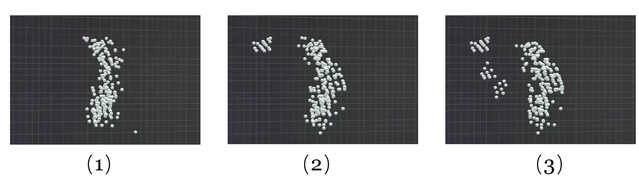
Millimeter wave radar recently receives a lot of attention because of the capability of sensing and fewer privacy leaking concerns. We mainly study to apply millimeter wave radar towards indoor scenarios, for localization, counting, tracking, warning of falling down, gesture/posture/gait recognition, et al. In this topic, we not only design machine learning based models for various applications but also consider edge computing problems like performance optimization in embedded platforms and/or edge-cloud coordination. The work is cooperated with Miaomi Technologies Co. Ltd. (苗米科技)
2. Parallel Job Scheduling

A moldable parallel job could be assigned a set of computation resources (e.g., CPUs, GPUs) before execution. The more computation resources used, the less execution time is needed (e.g., t2<t1). However, the more resources used, the more data synchronization costs arise, such that the workload of a moldable job is monotonic non-decreasing when the computation resources used increase (e.g., the area t2 * r2 >= t1 * r1). With such a job model, we are studying the problem of minimization the makespan when scheduling a set of moldable parallel jobs with limited heterogeneous resources (e.g., CPUs, GPUs).
3. Accelerating DNN models towards vertical applications
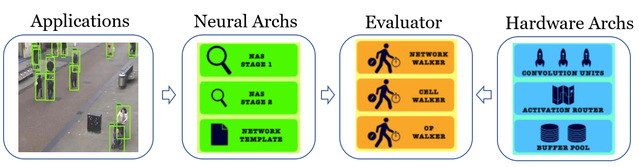
Deep neural network as a typical machine learning model can solve a lot of practical problems. However, deep neural network often involves a large amount of computations that can hardly adapt many edge scenarios with limited computation resources. We are studying the problem from a system architecture view that deep neural network model is lighten and designed to be hardware-aware, and meanwhile, dedicated hardware accelerator is proposed aiming to well map the neural network.
[1] Tongfei Shao, Zheyu Du, Chuanyou Li, Tianxing Wu, Meng Wang. Fast Human Action Recognition via Millimeter Wave Radar Point Cloud Sequences Learning. In Proc. of the 33rd ACM International Conference on Information and Knowledge Management (CIKM, CCF B), 2024.
[2] Jiangwei Shang, Kun Zhang, Zhan Zhang, Chuanyou Li, Lei Qian and Hongwei Liu. An Algorithm/Hardware Co-Optimized Method to Accelerate CNNs with Compressed Convolutional Weights on FPGA. Concurrency and Computation: Practice and Experience (CCPE), 2023, accepted.
[3] Chuanyou Li, Kun Zhang, Yifan Li, Jiangwei Shang, Xinyue Zhang, Lei Qian. ANNA: Accelerating Neural Network Accelerator through Software-Hardware Co-design for Vertical Applications in Edge Systems. Future Generation Computer Systems. 2023. (IF=7.307, JCR Q1, CCF C)
[4] Jiangwei Shang, Kun Zhang, Zhan Zhang, Chuanyou Li and Hongwei Liu, A High-Performance Convolution Block Oriented Accelerator for MBConv-Based CNNs. Integration, 2022. (CCF C)
[5] Yunbo Li, Chuanyou Li, Anne-Cécile Orgerie and Philippe Raipin. WSGP: A Window-based Streaming Graph Partitioning Approach. In Proc. of the 21th IEEE/ACM International Symposium on Cluster, Cloud and Internet Computing (CCGrid), Melbourne, Australia, May 10-13, 2021. (CCF C)
[6] Yujian Zhang, Chuanyou Li, Fei Tong, Yuwei Xu. A variable neighborhood search algorithm for energy conscious task scheduling in heterogeneous computing systems. Concurr. Comput. Pract. Exp. 33 (24), 2021. (IF=1.831, CCF C)
[7] Zheyi Liu, Darong Lai, Chuanyou Li and Meng Wang. Feature Fusion Based Subgraph Classification for Link Prediction. In Proc. of the 29th ACM International Conference on Information and Knowledge Management (CIKM), October 19-23, Online, 2020. (CCF B)
[8] Runtian Ren, Yuqing zhu, Chuanyou Li and Xueyan Tang. Interval Job Scheduling with Machine Launch Cost. IEEE Transactions on Parallel and Distributed Systems (TPDS), vol. 31, no. 12, pp. 2776-2788, 2020. (IF=3.757, CCF A)
[9] Chuanyou Li, Xueyan Tang. On Fault-Tolerant Bin Packing for Online Resource Allocation. IEEE Transactions on Parallel and Distributed Systems (TPDS), vol. 31, no. 4, pp. 817-829, 2020. (IF=3.757, CCF A)
[10] Jiayi Yuan, Hongye Li, Meng Wang, Ruyang Liu, Chuanyou Li, Beilun Wang. An OpenCV-based Framework for Table Information Extraction. In Proc. of the11th IEEE International Conference on Knowledge Graph (ICKG) 2020: 621-628
[11] Yitong Guan, Chuanyou Li, Xueyan Tang. On Max-min Fair Resource Allocation for Distributed Job Execution. In Proc. of the 48th International Conference on Parallel Processing (ICPP), August 5-8, Kyoto, Japan, 2019. (CCF B)
[12] Chuanyou Li, Xueyan Tang. Brief announcement: Towards Fault-Tolerant Bin Packing for Online Cloud Resource Allocation. In Proc. of the 29th ACM Symposium on Parallelism in Algorithms and Architectures (SPAA), July 24-26, Washington D.C., USA, 2017. (CCF B)
[13] Chuanyou Li, Michel Hurfin, Yun Wang and Lei Yu. Towards a Restrained Use of Non-equivocation for Achieving Iterative Approximate Byzantine Consensus. In Proc. of the 30th IEEE International Parallel & Distributed Processing Symposium (IPDPS), pages 710-719, May 23-25, Chicago, USA, 2016. (CCF B)
[14] Chuanyou Li, Michel Hurfin, Yun Wang. Reputation Propagation and Updating in Mobile Ad Hoc Networks with Byzantine Failures. In Proc. of the 14th IEEE International Conference on Trust, Security and Privacy in Computing and Communications (Trustcom), pages 111-118, 2015. (CCF C)
[15] Chuanyou Li, Michel Hurfin, Yun Wang. Approximate Byzantine Consensus in Sparse, Mobile Ad-hoc Networks. Journal of Parallel and Distributed Computing (JPDC), Elsevier, 74(9), pages 2860-2871, 2014. (IF=4.542, CCF B)
[16] Chuanyou Li, Yun Wang, Michel Hurfin. Clock synchronization in Mobile Ad Hoc networks Based on An Iterative Approximate Byzantine Consensus Protocol. In Proc. of the 28th International Conference on Advanced Information Networking and Applications (AINA), pages 210-217, 2014.
[17] Chuanyou Li, Michel Hurfin, Yun Wang. Reaching Approximate Byzantine Consensus in Partially-connected Mobile Networks. In Proc. of the 26th International Symposium on Distributed Computing (DISC) - Brief announcement, pages 405-406, 2012.
[18] Chuanyou Li, Yun Wang. A Robust and Secure Overlay Storage Scheme Based on Erasure Coding. In Proc. of the 5th International Conference on Pervasive Computing and Applications (ICPCA), 2010.
[19] Chuanyou Li, Yun Wang. State Synchronization for New Member Join in Byzantine Tolerant Environment. Journal of Southeast University (Natural Science Edition), in Chinese, 40(1), 2010, pages 23-28.
2022江苏省科学技术三等奖(6/11)
招生
I warmly welcome students who have solid background on Mathematics and/or Computer Science (e.g., have some experiences in ACM/ICPC, like or good at programming, et al.). I also warmly welcome students who have some experiences in hardware design (fpga, asic) or embedded systems and would like to design cool AI systems in the edge (e.g., smart homes, intelligent cabin, et al.). If you are interested in my topics, please feel free to drop me an email. :-)
Paper Reading Group
I am very happy that a new joint paper reading group on "Machine Learning System" has started. :-)
Students who want to joint us please refer to the following website: https://seu-sigmlsys.github.io/ and feel free to contact us.